

If your dog is heading into rehab or physical therapy, most owners focus on the medical side first, which makes sense. But here’s what I want you to know right away. Canine rehab training can make the entire recovery process smoother by teaching calm handling, cooperative movement, and simple obedience skills that reduce stress during exercises. When dogs understand what’s expected, they show more confidence, tolerate touch better, and are easier to guide through a safe routine.
As Off Leash K9 Training St. Louis MO Dog Trainers, we work with a lot of dogs who are recovering from injury, surgery, or pain-related behavior changes. In this post, I’ll walk you through how I approach canine rehab training, what owners can practice at home, and how training supports both comfort and behavior transformation during recovery.
Why canine rehab training supports recovery and behavior
Pain and reduced mobility can change a dog’s behavior quickly. A dog who was easygoing may become sensitive to touch. A dog who loved walks may get frustrated and restless. That frustration can show up as barking, pacing, pulling on leash, or refusing handling.
This is where canine rehab training helps in a practical way. We use obedience training to create predictable routines and calm cooperation, which matters because rehab requires repeated handling and guided movement.
Common rehab-related challenges that training can prevent include:
- Pulling away during stretches or range-of-motion work
- Mouthing or growling during paw, hip, or shoulder handling
- Overexcitement before appointments
- Difficulty loading into the car
- Leash pulling on short “rehab walks”
- Restlessness from reduced exercise
The goal is not to turn recovery into a boot camp. The goal is to build dog confidence and reduce stress so your dog can heal with fewer setbacks.
If you want a helpful mindset on why structure changes everyday behavior, I recommend The Gift of Obedience Training. Rehab is one of those times when clear routines matter even more.
Core skills that make canine rehab training easier
When dogs are uncomfortable, the best training is simple and supportive. These are the skills I prioritize first with canine rehab training:
- Place and calm settling
Place teaches your dog to relax on cue. It’s useful before and after exercises, and it reduces pacing at home. - Stand on cue
Standing still is a rehab skill. It helps during gentle handling, towel support, and guided movement. - Slow leash walking
Recovery walks are not cardio. They are controlled movement. Loose leash walking protects joints and prevents sudden lunges. - Handling tolerance
I want your dog comfortable with paws, legs, hips, shoulders, ears, and tail being touched calmly. - Impulse control basics
Sit and down with short duration can help your dog pause instead of launching into motion.
These skills support obedience training and off-leash reliability long-term, but in rehab they also protect your dog physically. Calm movement is safer movement.
A simple at-home canine rehab training routine
I like owners to keep this realistic. Most families do best with a small daily routine they can repeat.
Here’s a plan I often recommend for canine rehab training:
- Daily calm warm-up (2 minutes)
Ask for place, reward calm breathing, then stand briefly. - Handling practice (1 to 2 minutes)
Touch one area at a time. Stop while your dog is successful. Reward calm tolerance. - Controlled movement (3 to 5 minutes)
Slow leash walking, a few controlled sits, and careful turns. Keep it smooth and low-impact. - Mental enrichment (5 minutes)
Puzzle feeding, sniff work, or “find it” games help reduce boredom when exercise is limited. - Daily decompression (2 minutes)
Place again after activity. Reward calm. This teaches your dog to settle after movement.
If your dog is rehabbing after surgery or has a more complex condition, it’s always smart to follow your veterinary team’s specific instructions. For a helpful overview of what canine rehabilitation therapy can support, the American Kennel Club has a solid explanation here: Canine Rehabilitation Therapy: What to Know.
Veterinary Rehab of St. Louis (Ballwin, MO)
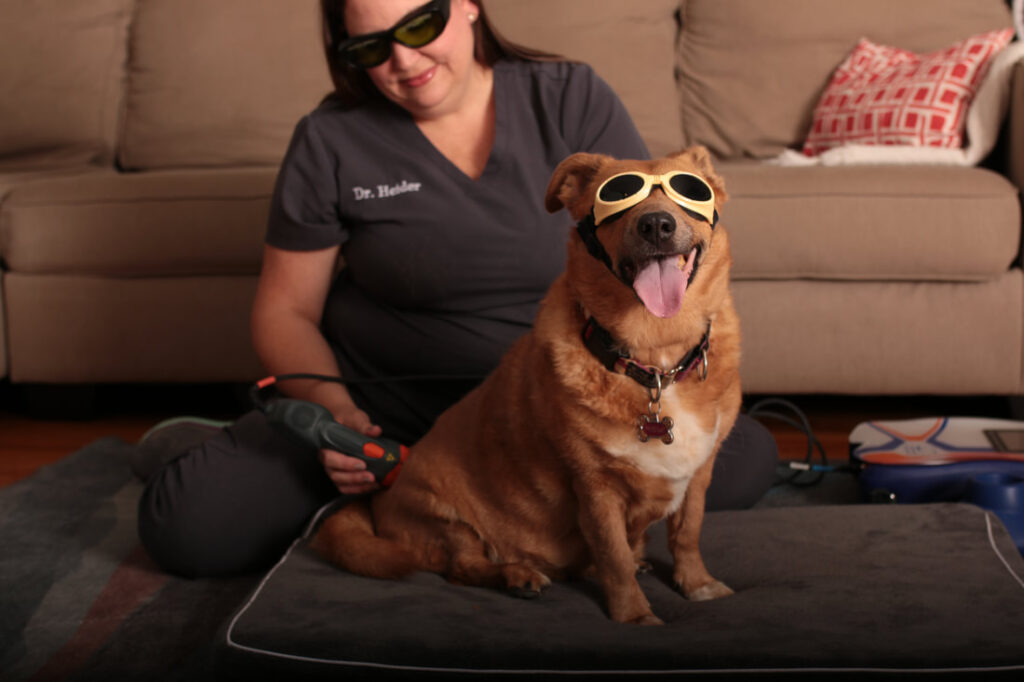
A local resource worth knowing about is Veterinary Rehab of St. Louis in Ballwin, Missouri, which is well within a 1 to 2 hour drive for Missouri dog owners in the St. Louis region. Rehab and physical therapy services can be a valuable part of recovery for dogs dealing with orthopedic injuries, neurologic issues, arthritis, or post-surgical healing.
Here’s their website: Veterinary Rehab of St. Louis.
Why it benefits dog owners:
- Rehab supports mobility, comfort, and safe strengthening
- Therapy plans often include repeatable exercises you can reinforce at home
- Dogs with better canine rehab training skills tend to cooperate more easily during sessions
- Calm obedience training helps dogs handle touch, equipment, and unfamiliar routines with less stress
To be clear, they are not a dog training provider. I’m sharing them as a local dog health resource that pairs naturally with the training support we offer.
When professional training helps rehab progress faster
Some dogs do great with a simple home plan. Others need coaching, especially if pain has created avoidance, guarding, or anxiety around handling. That’s when professional dog training can help you and your dog stay consistent without pushing too hard.
At Off Leash K9 Training St. Louis MO Dog Trainers, we often support rehab dogs through Private Lessons, and in some cases Board and Train when structure and controlled reps are needed. We can also tailor Basic Obedience work to support calm movement, leash control, and cooperative handling.
If you want to explore options, start with our Dog Training Programs page and we’ll match the right approach to your dog’s recovery stage and temperament.
If your dog is recovering from injury or surgery and you want a practical plan that supports calm handling and safe movement, reach out to Off Leash K9 Training St. Louis MO Dog Trainers. Contact us through our contact page and we’ll build a canine rehab training routine that fits your dog and your schedule.