
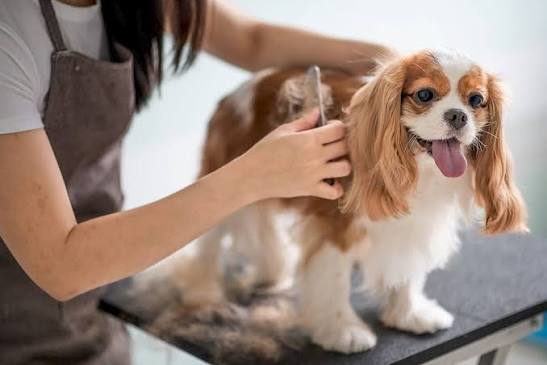

Grooming is part of everyday care for many dogs, but the experience can be stressful when a dog is uncomfortable with brushing, nail handling, bathing, dryers, or unfamiliar people. Dog grooming training helps prepare dogs for these situations by teaching them to remain calm, accept handling, and respond to simple directions throughout the appointment.
At Off Leash K9 Training St. Louis MO Dog Trainers, I encourage owners to practice grooming-related skills long before the next appointment. You do not need to recreate a complete grooming session at home. A few minutes of calm handling, place work, and obedience training each week can make a meaningful difference.
In this article, I will explain how to prepare your dog for grooming, which behaviors are most helpful, and how training can build confidence around routine care.
Why Dog Grooming Training Matters
A grooming appointment asks a lot from a dog. Someone may touch their paws, ears, face, tail, and coat. Clippers can vibrate and make unfamiliar sounds. Dryers can be loud. Dogs may also encounter new smells, equipment, and people.
A dog who has never practiced these experiences may become restless, frightened, or resistant.
The American Kennel Club recommends gradually teaching dogs to become comfortable with handling and routine husbandry procedures. Its guidance on helping dogs enjoy grooming emphasizes getting dogs accustomed to being touched from their toes to their ears and tail.
Good dog grooming training can include:
- Calmly allowing paws to be touched
- Standing still for short periods
- Accepting gentle brushing
- Remaining relaxed during ear handling
- Settling on a mat or place
- Responding to basic obedience commands
- Walking calmly toward and away from the grooming area
The goal is not to force a nervous dog to tolerate everything immediately. I want dogs to learn through manageable practice that handling can be predictable and safe.
Dog Grooming Training You Can Practice at Home
Start in a quiet area when your dog is relaxed. Keep sessions short and stop before either of you becomes frustrated.
Here is a simple routine:
- Practice calm paw handling
Touch one paw briefly, reward calm behavior, and release it. Gradually work toward holding the paw for a few seconds. Do not immediately jump to nail trimming.
- Introduce brushing slowly
Let your dog inspect the brush before gently brushing a small section of the coat. Reward calm behavior and gradually increase the amount of brushing.
- Work on standing still
A reliable stand can make grooming easier. Ask your dog to remain standing for several seconds while you gently touch their sides, shoulders, and back.
- Build a dependable place command
Teaching your dog to settle on a designated mat or bed can improve impulse control and help them learn how to relax after excitement.
- Practice around household sounds
Some dogs are sensitive to equipment noises. Introduce mild sounds gradually rather than immediately exposing your dog to something loud at close range.
Consistency matters more than long training sessions. Dog grooming training practiced for a few minutes several times a week can help handling become part of your dog’s normal routine.
This is also where foundational obedience becomes valuable. Our article on The Gift of Obedience Training explains how clear expectations and consistent communication can improve situations far beyond formal training sessions.
Watch What Your Dog Is Telling You
Not every dog shows stress in the same way. Some become vocal or try to move away. Others become unusually still.
During dog grooming training, pay attention to changes in your dog’s body language, including:
- Repeated attempts to pull away
- Tucking the tail
- Persistent panting
- Avoiding contact
- Stiff body posture
- Growling or snapping
- Refusing rewards they normally enjoy
If your dog becomes overwhelmed, increasing pressure usually does not solve the problem. Reduce the difficulty and return to a level where the dog can think and respond.
Dogs with a history of severe fear, aggression, or painful handling may also need veterinary input before training continues. Pain can change behavior, and training should never substitute for appropriate medical care.
Building dog confidence means giving your dog successful experiences and gradually expanding what they can handle.
Regional Dog-Friendly Business Spotlight
Pup Buzz Mobile is a mobile grooming service serving St. Louis West County. The family-owned business brings a fully equipped grooming van to clients’ homes and provides one-on-one grooming rather than requiring owners to transport their dogs to a traditional salon. Services listed on its official site include bathing, blow-drying, brushing, nail trimming, ear cleaning, and haircut options.

Mobile grooming can be useful for owners who value convenience or want to avoid the additional stimulation of transporting their dog into a busy grooming facility. However, a quieter setting does not eliminate the importance of dog grooming training. Dogs still need to accept handling, equipment, water, drying, and grooming procedures.
Pup Buzz Mobile is featured here as a regional grooming resource and should not be confused with Off Leash K9 Training St. Louis MO Dog Trainers. Groomers provide an important pet-care service, while our role is professional dog training and behavior development.
A dog who understands how to stand calmly, follow direction, and recover from excitement may be easier to manage during many routine care experiences, including grooming.
Building Confidence Before the Groomer Arrives
On grooming day, try to keep your dog’s routine normal. A structured walk beforehand may help reduce excess energy, but avoid exhausting your dog.
Before the appointment:
- Give your dog time for a bathroom break
- Avoid creating extra excitement around the groomer’s arrival
- Have your dog under control rather than allowing jumping at the door
- Practice a few familiar obedience commands
- Communicate any known handling concerns to the groomer
If you have multiple dogs, work with them individually whenever possible. Each dog should learn to tolerate handling without depending on another dog for confidence. Our guide to Multi-Dog Success offers additional tips for building structure and individual responsiveness in multi-dog households.
Remember that dog grooming training is not about creating a perfectly motionless dog. It is about helping your dog understand expectations and remain manageable during necessary care.
When Professional Dog Training Can Help
Some grooming difficulties are part of a larger behavior pattern. A dog who cannot tolerate being touched may also struggle with impulse control, fear, reactivity, or unfamiliar environments.
At Off Leash K9 Training St. Louis MO Dog Trainers, we can help owners build clearer communication through professional dog training. Depending on the dog’s age and needs, options may include Puppy Training, Private Lessons, Off-Leash Obedience, or Basic & Advanced Obedience.
Structured dog grooming training can benefit from skills such as place, sit, down, stand, leash manners, and calm handling. These same foundations support behavior transformation, dog confidence, and better responses during everyday activities.
Training is especially worth considering when your dog repeatedly becomes too overwhelmed to respond, tries to escape handling, or struggles with basic control around visitors and new environments.
Ready to Make Routine Care Easier?
Grooming does not have to begin with a stressful appointment. Start with small handling exercises at home, reinforce calm behavior, and gradually introduce the sights, sounds, and sensations your dog will encounter.
With consistent dog grooming training, routine care can become more predictable for both you and your dog.
If your dog needs stronger obedience, better impulse control, or more confidence during everyday handling, Off Leash K9 Training St. Louis MO Dog Trainers can help. Contact our St. Louis dog training team to find the right training approach for your dog.