

When people hear agility training, they often picture a fast dog flying over jumps and weaving through poles. That can be part of it, but the bigger value is more practical: agility-style work can help dogs build focus, body awareness, confidence, and better communication with their handler. For many Missouri dog owners, it is also a healthy outlet for dogs who need more than a walk around the block.
As Off Leash K9 Training St. Louis MO Dog Trainers, I look at agility training through the lens of obedience and real-life behavior. A dog does not need to be a competition athlete to benefit from learning how to move with purpose, listen around excitement, and wait for direction. In this post, I’ll explain how agility training supports obedience training, what foundation skills matter first, and how to use it safely as part of a bigger behavior plan.
Why agility training helps more than energy levels
A tired dog is not automatically a trained dog. That is an important distinction. Physical activity helps, but dogs also need structure and mental engagement. Agility training gives dogs a job that combines movement, listening, problem-solving, and handler awareness.
That can help with:
- Better focus around distractions
- Improved dog confidence through small wins
- More body awareness, especially for clumsy or impulsive dogs
- Stronger handler communication
- Healthier outlets for high-energy dogs
- Better impulse control when the dog learns to wait for cues
The American Kennel Club describes agility as a sport where dogs navigate obstacles with handler guidance, and their beginner information is a useful starting point for owners who want to understand how the activity works. You can read more here: AKC Agility: Get Started.
The key is not speed. The key is teamwork. When a dog learns to move with you instead of ahead of you, that teamwork can support off-leash reliability and long-term behavior transformation.
If you want a deeper look at why structure matters in daily life, I recommend reading The Gift of Obedience Training.
Agility training starts with obedience first
Before I recommend agility-style work, I want a dog to have basic obedience in place. Without that foundation, agility training can turn into frantic movement instead of controlled learning.
Here are the skills I want first:
- Sit and down with duration
Your dog should be able to pause and hold position before being released. - Place or stationing
This teaches your dog to wait calmly between reps. - Recall
A reliable recall keeps the dog engaged and safe. - Heel or controlled movement
This helps your dog learn to move with you, not drag you. - Leave it
Useful around equipment, toys, treats, and other dogs.
At Off Leash K9 Training St. Louis MO Dog Trainers, we focus on obedience training that holds up outside the living room. That same foundation makes agility training safer and more productive.
How to begin agility training safely at home
You do not need expensive equipment to begin. In fact, I prefer starting simple. The goal is controlled confidence, not big obstacles.
Try this beginner plan:
Step 1: Teach targeting
Use a mat, low platform, or towel. Ask your dog to step on it, then reward calm success.
Step 2: Add low movement drills
Practice walking between cones, stepping over a broom handle on the ground, or moving around a chair.
Step 3: Use release cues
Your dog should wait, then move when released. This builds impulse control.
Step 4: Keep sessions short
Five to ten minutes is enough. Stop while your dog is still successful.
Step 5: Avoid high jumps early
Young dogs, senior dogs, and dogs with orthopedic issues should avoid repetitive impact unless cleared by a veterinarian.
This kind of agility training pairs well with professional dog training because it reinforces focus, engagement, and confidence. It is especially helpful for dogs who need mental work, not just more mileage.
Regional Dog-Friendly Business Spotlight
Dog Sports at Kim’s (Caseyville, IL)
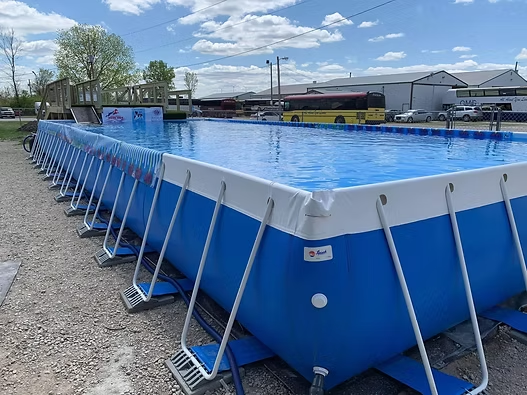
This week’s featured regional business is Dog Sports at Kim’s in Caseyville, Illinois, which is within easy driving distance of the St. Louis metro area. Their website describes Dog Sports at Kim’s as a place for competitive and family dog training in the St. Louis and Metro East area, with classes and dog sport opportunities. Their facility page also describes a large indoor, climate-controlled dog sports complex with agility and obedience rings.
You can learn more here: Dog Sports at Kim’s.
Why this benefits dog owners:
- It offers a dedicated dog sports environment for handlers interested in agility
- Indoor space can help owners continue structured activity during poor weather
- Dog sport settings encourage focus, communication, and confidence
- It connects naturally with agility training because dogs need obedience and handler awareness to succeed
To be clear, Dog Sports at Kim’s is the featured regional dog sports business. The primary business in this blog is Off Leash K9 Training St. Louis MO Dog Trainers. If your dog needs stronger manners, calmer behavior, or better reliability before adding sports, that is where our professional dog training programs can help.
When professional training should come first
Some dogs are ready for beginner agility-style exercises right away. Others need more foundation first, especially if they struggle with reactivity, poor recall, overexcitement, or low confidence.
At Off Leash K9 Training St. Louis MO Dog Trainers, we help Missouri owners build the obedience training that makes activities like agility training more successful. Depending on your dog, we may recommend Private Lessons, Basic Obedience, Basic & Advanced Obedience, Board and Train, or Off-Leash Obedience.
You can explore our Dog Training Programs to see which option fits your dog best.
Ready to build better focus?
If your dog has energy but needs direction, agility training can be a great goal, especially when it is built on strong obedience. At Off Leash K9 Training St. Louis MO Dog Trainers, we can help you create a plan that improves focus, confidence, and real-world reliability. Reach out through our contact page and we’ll talk about the best next step for your dog.