

If you live in Missouri, you know how quickly the weather can change plans. One week we’re enjoying long walks, the next we’re dodging cold rain or muddy trails. For a lot of dogs, especially the ones who get overwhelmed by other dogs or busy environments, that unpredictability can make behavior feel worse. Here’s the value up front: reactive dog training gets easier when you have a plan for calm, controlled exercise and mental work, even when you are stuck indoors. That’s how you build steadier obedience training, better focus, and real dog confidence.
In this post, I’ll explain why indoor structure matters for reactivity, what I focus on as Off Leash K9 Training St. Louis MO Dog Trainers, and how to use safe indoor outlets to support behavior transformation. I’ll also spotlight a St. Louis business that can be a great tool for dogs who need space without social pressure.
Why reactive dog training needs structure, not just exercise
When a dog is reactive, the temptation is to “wear them out.” Exercise helps, but fatigue alone does not teach self-control. Reactivity is often a mix of big feelings, quick triggers, and habits that have been rehearsed over time. Reactive dog training works best when we teach a dog how to regulate, disengage, and follow direction around stressors.
Here are a few signs your dog may need more structured work:
- Barking, lunging, or growling on leash when dogs or people appear
- Spinning, whining, or frantic scanning on walks
- Difficulty settling at home after stimulation
- Overreacting to sounds outside the window or door
- “Flooding” quickly in busy places, then shutting down or exploding
As Off Leash K9 Training St. Louis MO Dog Trainers, we approach this through clear communication and repeatable routines. Structure builds predictability, and predictability builds calm.
If you want a good foundation mindset that supports reactive dog training, I recommend The Gift of Obedience Training. It explains why reliable obedience is more than manners. It’s the framework that helps dogs make better choices under stress.
Reactive dog training inside the home: what I prioritize first
Indoor time can either help or hurt reactivity. If the home becomes an all-day chaos zone, reactivity tends to worsen. If the home has rules and calm routines, dogs learn how to settle. That settling skill carries out into the world.
These are my top indoor priorities for reactive dog training:
- Place training for an off switch
Place is one of the most valuable tools for behavior transformation. It teaches a dog to stay put and relax even when they feel keyed up. - Leash skills indoors
Practicing a calm heel in hallways sounds simple, but it builds impulse control without the stress of outdoor triggers. - Pattern games and engagement
I want your dog practicing check-ins and focus on you, not scanning for threats. - Enrichment that matches the dog
Chewing, sniffing, and problem-solving are powerful outlets. They also reduce frustration.
If your dog tends to get stir-crazy during bad weather, our post on Winter Training: Perfect Progress is still relevant even outside winter. Consistency, short sessions, and clear expectations are the same recipe year-round.
For a high-authority guide to enrichment that supports calm behavior, the ASPCA has a strong resource here: Canine DIY Enrichment. That kind of structured enrichment pairs well with reactive dog training because it gives dogs appropriate outlets for natural behaviors.
Dog-Friendly Business Spotlight
Doozle’s Den (St. Louis, MO)
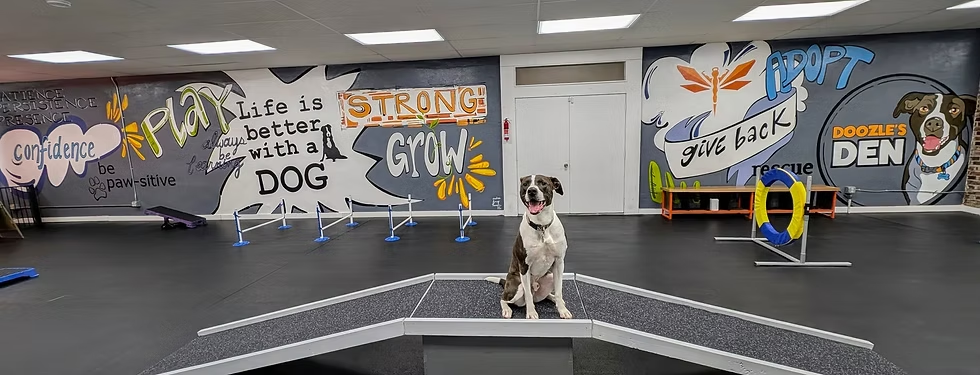
One local option I really like for reactive dogs is Doozle’s Den in St. Louis, Missouri. It’s a private indoor play and agility space you can rent, which means your dog can move, explore, and work on confidence without the pressure of random dogs or busy public areas.
Why it benefits dog owners:
- You can practice reactive dog training skills in a controlled environment
- It’s ideal for dogs who do better without surprise greetings
- The equipment and space can support confidence-building and engagement work
- It gives owners a way to train and exercise when weather is miserable
This kind of setting is especially useful for dogs who need reps in calm focus before they are ready for busier parks or sidewalks.
A practical indoor plan that supports reactive dog training
If you want something simple and repeatable, here’s a plan I give many owners in the St. Louis area.
Daily (10 to 20 minutes total, split up):
- 5 minutes of place work
- 5 minutes of leash walking practice indoors
- 5 minutes of engagement drills (name response, check-ins, simple recalls)
Add enrichment once per day:
- Stuffed food toy or puzzle feeding
- “Find it” scent game with kibble
- A chew session with clear boundaries on place
Weekly confidence reps:
- Book a calm, controlled space when needed
- Work short sessions with clear goals like place duration, recall, and disengagement
The key takeaway is consistency. Reactive dog training is not about proving your dog can handle everything today. It’s about stacking successful reps so your dog learns they can stay calm and look to you for direction.
When professional training makes the biggest difference
If reactivity is already intense, or if you feel like you’re managing symptoms without progress, professional help is worth it. At Off Leash K9 Training St. Louis MO Dog Trainers, we build obedience training that holds up under real distractions and supports off-leash reliability over time.
Depending on your dog, we may recommend:
- Private Lessons for hands-on coaching and customization
- Board and Train for immersive structure and faster habit change
- Off-Leash Obedience work to build reliability and confidence
You can review our Dog Training Programs to see what fits your goals and your dog’s needs.
If you’re ready to turn stressful walks into steady progress, I’d love to help. Reach out to Off Leash K9 Training St. Louis MO Dog Trainers through our contact page and we’ll talk through the best plan for your dog and your routine.